

Steatocystoma multiplex
SCM; "steatocystoma multiplex congenita"; "epidermoid cyst, sebaceous-gland-lined" (older); the cutaneous phenotype of pachyonychia congenita type 2 (PC-K17 / KRT17 mutations)
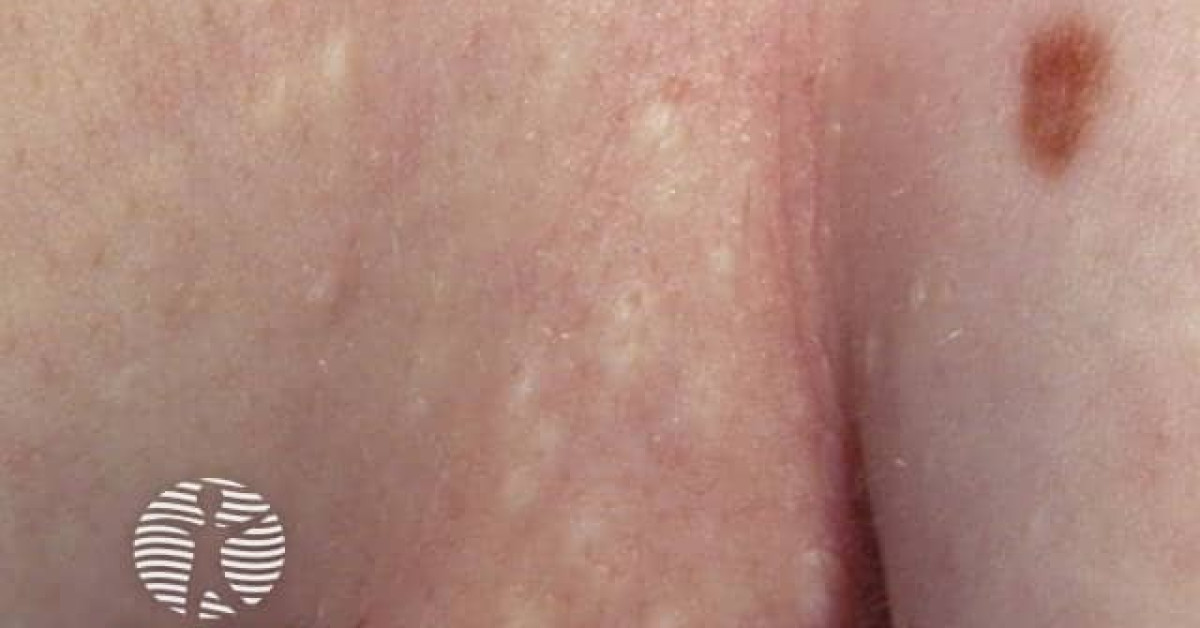
Steatocystoma multiplex is an autosomal dominant hereditary cutaneous disorder characterised by multiple (often dozens to hundreds) small to medium-sized, soft, dermal-subcutaneous cysts that develop in adolescence and accumulate progressively into adulthood, most commonly distributed on the chest, axillae, neck, scrotum and proximal extremities. Each cyst arises from the sebaceous (pilosebaceous) duct and is lined by epithelium with intracystic sebum (rather than keratin, distinguishing histologically from epidermoid cyst). The disease is caused by germline missense mutations of KRT17 on chromosome 17q21.2, which also (with different mutations) causes pachyonychia congenita type 2 (PC-K17) — and the two conditions can co-exist within the same kindred. Steatocystoma multiplex is benign with no malignant potential, but the cumulative cosmetic burden in heavily affected individuals is substantial. Sporadic cases (steatocystoma multiplex without inheritance) also occur. The skin-oncology relevance is the recognition of multiple inherited cysts as a distinct diagnostic entity (vs sporadic epidermoid cysts) and the link to pachyonychia congenita.
Genetics
- Autosomal dominant.
- Caused by germline missense mutations of KRT17 on chromosome 17q21.2 — encoding keratin 17, expressed in sebaceous gland epithelium and nail / hair follicle.
- The same gene (with different specific mutations) causes pachyonychia congenita type 2 (PC-K17) — a related condition with hypertrophic nail dystrophy + focal palmoplantar keratoderma + cysts.
- Steatocystoma multiplex and PC-K17 can co-exist in the same patient or kindred — different KRT17 mutations producing different phenotypes.
- Sporadic (non-familial) cases of steatocystoma multiplex also occur.
- Confirm by germline KRT17 sequencing where indicated.
Clinical features
- Multiple (often dozens to hundreds) small to medium-sized (0.5–3 cm), soft, dermal-subcutaneous cysts.
- Distribution — chest (commonest), axillae, neck, upper arms, scrotum, proximal extremities; less often face, scalp.
- Onset typically in adolescence; progressive accumulation through adulthood.
- Asymptomatic; cosmetic concern is the principal presenting issue; occasional rupture / inflammation.
- On puncture / incision — yellow oily sebaceous material expressed (vs cheesy keratin in epidermoid cyst).
- Variants:
- Steatocystoma simplex — solitary lesion.
- Steatocystoma multiplex congenita — present from infancy.
- Steatocystoma multiplex suppurativa — recurrent inflammation / rupture / infection of multiple cysts; severely cosmetically disfiguring.
Histology
- Cyst lined by stratified squamous epithelium with a characteristic thick, eosinophilic, festooned (corrugated) cuticle on the inner surface.
- Importantly, sebaceous gland lobules are seen within or adjacent to the cyst wall — diagnostic of the sebaceous-derived nature of the cyst (vs epidermoid cyst which has stratified squamous epithelium with granular layer and lamellar keratin contents).
- Cyst contents — clear oily sebum (lost in routine processing — cyst lumen often appears empty on histology slide).
- No atypia.
Management
- Reassurance — steatocystoma multiplex is benign and stable; cosmetic management is the goal.
- Treatment options (multiple lesions, recurrence common):
- Surgical excision with cyst wall — first-line for symptomatic / cosmetically intrusive lesions; "minimal incision" technique for cosmesis.
- Incision and drainage of cyst contents — temporary; recurs.
- Aspiration and contents expression.
- CO₂ laser ablation.
- Cryotherapy.
- Topical retinoids — limited efficacy.
- Isotretinoin — for steatocystoma multiplex suppurativa (severe inflammatory variant); modest efficacy.
- Inflamed / infected cysts — incision and drainage plus oral flucloxacillin / clindamycin; arrange elective excision after settling.
- Genetic counselling — if KRT17 mutation confirmed, discuss heritability (50% recurrence risk in offspring) and the link to pachyonychia congenita.
- Refer to a specialist plastic / dermatological surgery service for advanced cosmetic management of heavily affected patients.
References
- Smith FJD et al. Steatocystoma multiplex caused by a novel mutation in keratin K17. Br J Dermatol; 1997.
- Klein W et al. Steatocystoma multiplex — review. J Eur Acad Dermatol Venereol; 2014.
Spot a correction?
If any clinical statement, citation or link on this page needs updating, please email admin@skinoncology.net with the page name, the proposed correction and the supporting source.