

Xanthelasma palpebrarum
XP · xanthelasma · periocular xanthoma
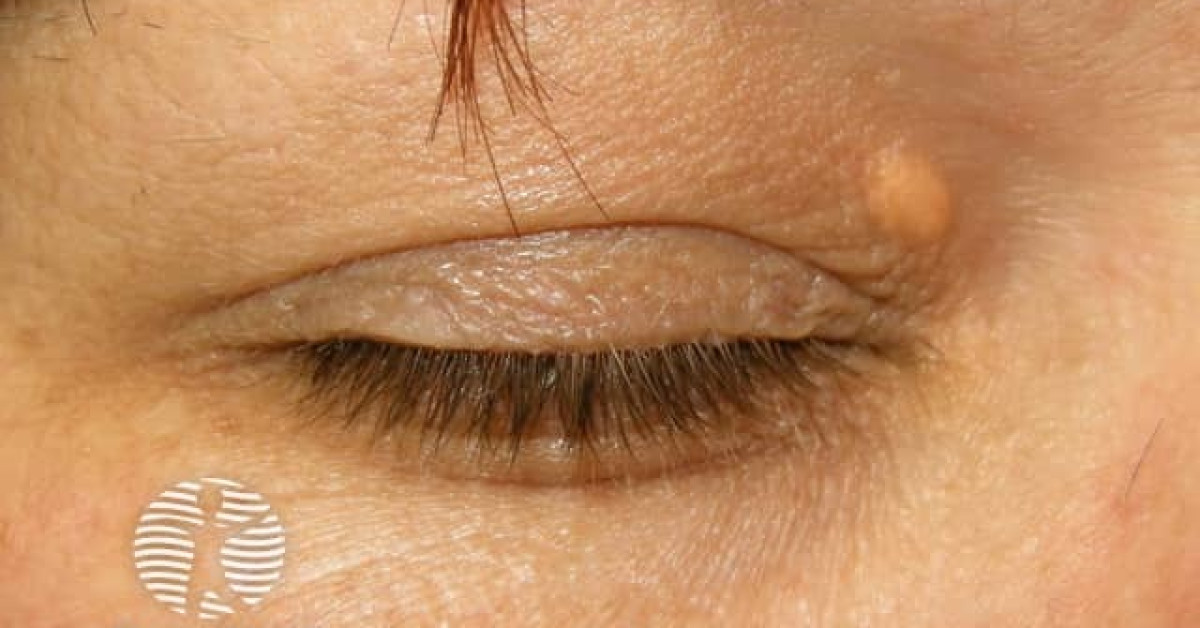
Xanthelasma palpebrarum is the most common cutaneous xanthoma, presenting as yellow-orange, soft, plaque-like deposits on the eyelids. Approximately 50% of patients have hyperlipidaemia, including familial hypercholesterolaemia; the remainder are normolipidaemic. Importantly, xanthelasma in normolipidaemic patients is an independent marker of cardiovascular disease risk (Christoffersen 2011, Copenhagen General Population Study). It is also a feature of multicentric reticulohistiocytosis and necrobiotic xanthogranuloma — both with paraneoplastic associations.
Pathogenesis
- Foamy lipid-laden macrophages (xanthoma cells) in the upper dermis containing cholesterol and cholesterol esters.
- Female > male; peak 4th-5th decade.
- Associations:
- Familial hypercholesterolaemia (LDL-R mutations).
- Type II / III dyslipidaemia.
- Primary biliary cholangitis.
- Diabetes mellitus.
- Hypothyroidism.
- Multicentric reticulohistiocytosis (paraneoplastic).
- Necrobiotic xanthogranuloma (paraproteinaemia).
Clinical features
- Yellow-orange, soft, slightly elevated plaques on medial canthal eyelids; often bilateral, symmetric.
- Slow enlargement over months-years.
- Asymptomatic — cosmetic concern is main driver of presentation.
- No predilection for malignancy directly, but a cardiovascular risk marker even when serum lipids normal (Copenhagen General Population Study).
Differentials
- Sebaceous hyperplasia — central dell; not yellow plaque.
- Syringoma — small skin-coloured papules; periocular.
- Milia / hidrocystoma.
- Sebaceous carcinoma of the eyelid — solitary, atypical, may simulate xanthelasma initially.
- Necrobiotic xanthogranuloma — large, periorbital; paraproteinaemia.
- Adult-onset asthma + periocular xanthogranuloma (AAPOX).
Investigations
- Fasting lipid profile (total cholesterol, LDL-C, HDL-C, triglycerides, lipoprotein(a)).
- Cardiovascular-risk score (QRISK3 in UK).
- Glucose / HbA1c, TFT, LFT (PBC).
- If atypical / multiple / large: serum / urine electrophoresis, paraproteinaemia screen (necrobiotic xanthogranuloma).
- Examination for tendinous / tuberous xanthomas, arcus, corneal opacities.
Management
- Address underlying hyperlipidaemia: lifestyle, statin, ezetimibe, PCSK9 inhibitor per NICE / cardiology.
- Cosmetic removal options (high recurrence):
- Trichloroacetic acid (TCA) 50-100% — well-validated; multiple sessions; risk of pigment change in Fitzpatrick III-VI.
- Surgical excision — preferred for thick / large lesions; risk of ectropion at lower eyelid.
- CO2 / Er:YAG laser ablation.
- Cryotherapy.
- Electrodessication.
- Topical pingyangmycin / radiofrequency (off-label).
- Counsel about recurrence (~40%) and cardiovascular risk significance.
- Refer for cardiology / lipid clinic review if dyslipidaemia confirmed.
References
- Christoffersen M et al. Xanthelasmata, arcus corneae, and ischaemic vascular disease and death in general population: prospective cohort study. BMJ. 2011;343:d5497.
- Bergman R. The pathogenesis and clinical significance of xanthelasma palpebrarum. J Am Acad Dermatol. 1994;30:236-242.
- Mendelson BC, Masson JK. Xanthelasma: follow-up on results after surgical excision. Plast Reconstr Surg. 1976;58:535-538.
- Nair PA, Singhal R. Xanthelasma palpebrarum — a brief review. Clin Cosmet Investig Dermatol. 2018;11:1-5.
Spot a correction?
If any clinical statement, citation or link on this page needs updating, please email admin@skinoncology.net with the page name, the proposed correction and the supporting source.