

Erysipelas
St Anthony's fire · superficial cellulitis
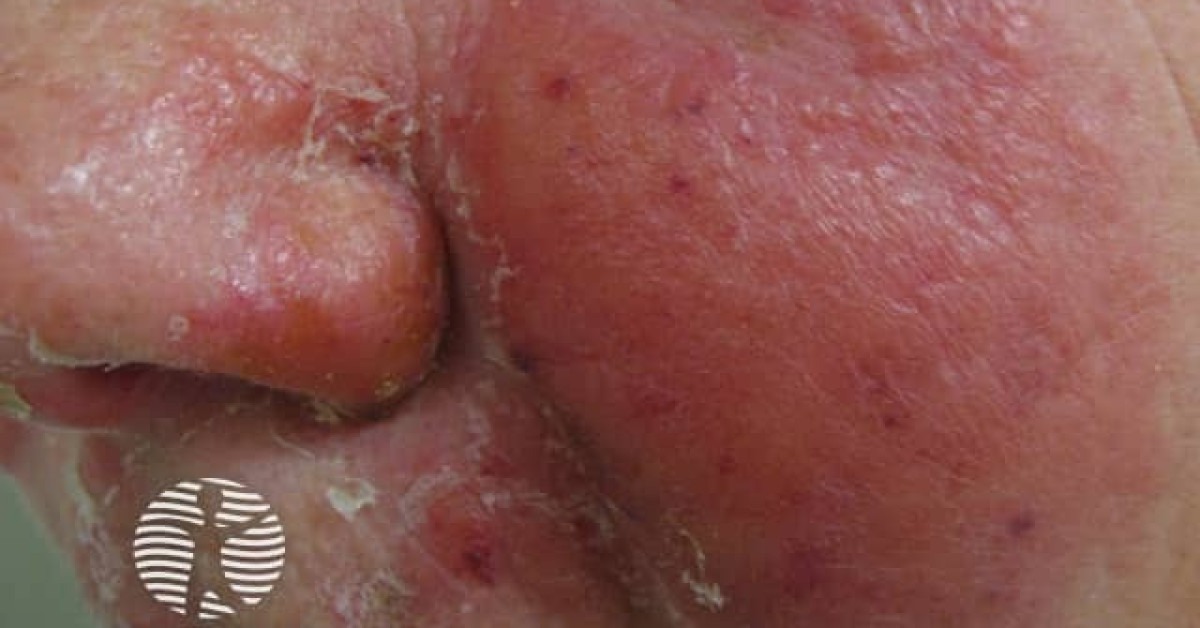
Erysipelas is a sharply demarcated, raised, fiery red dermal cellulitis caused predominantly by β-haemolytic streptococci. Compared to classical cellulitis it involves more superficial dermis with greater dermal lymphatic involvement, hence the well-defined edge. The face and lower limbs are the commonest sites. Recurrence is common — particularly with chronic lymphoedema, obesity and chronic interdigital tinea. NICE NG141 covers both erysipelas and cellulitis with similar antibiotic frameworks but a stronger streptococcal-targeted bias.
Microbiology
- Streptococcus pyogenes (group A) — predominant.
- Group B, C, G streptococci.
- Staphylococcus aureus less common; consider when purulent component / abscess present.
- Recurrent erysipelas commonly streptococcal; long-term phenoxymethylpenicillin prophylaxis effective (PATCH-II RCT).
Clinical features
- Sharply demarcated, raised, glossy fiery-red plaque with palpable step-off from normal skin (distinct from cellulitis which has ill-defined borders).
- Onset within hours; rapid expansion.
- Constitutional features: fever, rigors, malaise; lymphangitic streaks; regional lymphadenopathy.
- Sites:
- Lower leg — most common (60-70%); portal of entry often interdigital tinea or chronic fissure.
- Face — butterfly distribution; classic St Anthony's fire.
- Post-mastectomy arm (lymphoedema-related).
- Bullae and haemorrhagic vesicles in severe cases.
Differential diagnosis
- Contact dermatitis — pruritus dominates; geometric distribution.
- Acute lymphoedema flare — bilateral or unilateral on chronically lymphoedematous limb.
- Lupus malar rash — slow onset; spares nasolabial folds; not febrile.
- Cutaneous lupus / polymorphic light eruption on face.
- Carcinoma erysipeloides — slowly progressive in patient with internal malignancy; biopsy.
- Necrotising fasciitis — pain out of proportion, dusky bullae, crepitus, systemic toxicity.
- Stasis dermatitis / lipodermatosclerosis — bilateral, chronic, hyperpigmented.
Management
- First-line per NICE NG141: oral flucloxacillin 500 mg QDS for 5-7 days; penicillin V remains effective if pure streptococcal.
- Penicillin-allergic: clarithromycin 500 mg BD or doxycycline 200 mg loading then 100 mg OD.
- Facial erysipelas: co-amoxiclav 500/125 mg TDS.
- Severe systemic features: IV benzylpenicillin or co-amoxiclav, transition to oral.
- Mark advancing edge; elevation; analgesia; treat portal of entry (tinea pedis with terbinafine; chronic eczema with emollients / topical steroids).
- Recurrence prophylaxis: penicillin V 250 mg BD long-term per PATCH-II if ≥2 episodes in 12 months on the same limb. Lymphoedema referral.
Practical points
- Recurrence rate is high — counsel patients to recognise early symptoms and self-start a stand-by course.
- Treat interdigital tinea aggressively — single most preventable trigger.
- Photograph the demarcated edge at first presentation — useful baseline for response to therapy.
- Persistent or atypical "erysipelas" in older adults — biopsy and consider carcinoma erysipeloides or cutaneous angiosarcoma.
References
- NICE NG141. Cellulitis and erysipelas: antimicrobial prescribing. London: NICE; 2019.
- Bonnetblanc JM, Bedane C. Erysipelas: recognition and management. Am J Clin Dermatol. 2003;4:157-163.
- Thomas KS et al. Penicillin to prevent recurrent leg cellulitis (PATCH II). N Engl J Med. 2013;368:1695-1703.
- Cox NH. Oedema as a risk factor for multiple episodes of cellulitis/erysipelas of the lower leg: a series with community follow-up. Br J Dermatol. 2006;155:947-950.
Spot a correction?
If any clinical statement, citation or link on this page needs updating, please email admin@skinoncology.net with the page name, the proposed correction and the supporting source.