

InfectionCommon DDxICD-10 L03.x
Cellulitis
Bacterial cellulitis · acute bacterial skin and skin-structure infection (ABSSSI)
Cellulitis is an acute bacterial infection of the dermis and subcutaneous tissue, most commonly due to β-haemolytic streptococci and Staphylococcus aureus. In skin-oncology practice it is a daily differential for inflamed epidermoid cysts, post-operative infection, lymphoedematous limb flares, panniculitis and lobular angiosarcoma. The CREST/Eron classification and NICE NG141 framework guide oral vs IV management and admission decisions.
CurrentLast reviewed 16 May 2026
Microbiology
- β-haemolytic streptococci (group A, C, G) — most common; predominate in classic erysipelas-like cellulitis and recurrent disease.
- Staphylococcus aureus — particularly with abscess / purulent component; MRSA in care-home or healthcare-associated settings.
- Atypical / contact-exposure organisms:
- Vibrio vulnificus, Aeromonas hydrophila — fresh / salt water exposure.
- Pasteurella multocida, Capnocytophaga canimorsus — animal bites.
- Eikenella corrodens — human bites.
- Erysipelothrix rhusiopathiae — fish / meat handlers (erysipeloid).
- Mycobacterium marinum — fish-tank / aquarium granuloma.
Clinical features and assessment
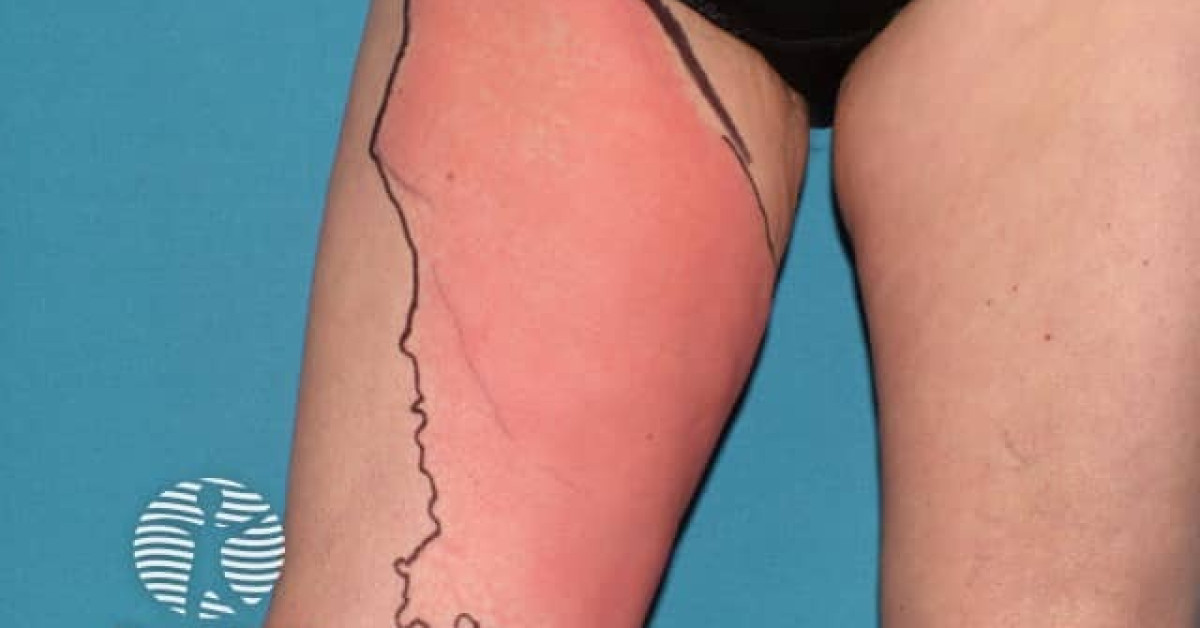
- Acute, hot, tender, poorly-defined erythema with rapid expansion; commonly unilateral; lower limb most frequent in adults.
- Systemic features (fever, rigors, leucocytosis) in classes II-IV.
- Mark the edge at presentation to monitor progression.
- Eron / CREST classification:
- I — no systemic toxicity or comorbidity → oral antibiotics outpatient.
- II — systemic features or significant comorbidity → home IV via OPAT or short admission.
- III — systemic toxicity (SIRS), unstable comorbidity, limb-threatening → admission, IV antibiotics.
- IV — sepsis, necrotising fasciitis suspected → emergency surgical review.
Skin-oncology differentials
- Lymphoedema flare / acute on chronic — common after lymphadenectomy.
- Inflamed epidermoid / sebaceous cyst — well-defined; central punctum; rubbery on resolution.
- Erysipelas — sharply demarcated, raised, classically facial / lower-limb (separate page).
- Acute contact dermatitis — pruritus dominates over pain; geometric distribution.
- Stasis dermatitis / lipodermatosclerosis — chronic, bilateral, hyperpigmented; not erysipelas-like.
- Deep vein thrombosis — calf tenderness, Homans sign; Wells score; D-dimer.
- Inflammatory breast cancer or recurrent cutaneous metastasis — peau d'orange; firm.
- Cutaneous angiosarcoma — particularly in older adults, post-mastectomy lymphoedema (Stewart-Treves) or after radiotherapy.
- Necrotising fasciitis — pain out of proportion, dusky / bullous skin, crepitus, systemic toxicity — surgical emergency.
- Inflammatory carcinoma erysipeloides — breast / gastric / lung metastasis simulating cellulitis.
Investigations
- Routine: FBC, CRP, U&E, LFT, lactate, blood cultures if class II+.
- Swab any open wound or pustule; aspirate fluctuant collections.
- Imaging: lower-limb venous Doppler if DVT possible; soft-tissue ultrasound for collection; MRI / CT if necrotising fasciitis or bone involvement suspected.
- If recurrent: consider tinea pedis as portal of entry; assess for chronic lymphoedema, obesity, varicose eczema.
- If unilateral, painless, slowly progressive in older adult — biopsy to exclude carcinoma erysipeloides or angiosarcoma.
Management
- NICE NG141 (2019):
- Class I (no MRSA risk): oral flucloxacillin 500 mg-1 g QDS for 5-7 days (or clarithromycin / doxycycline if penicillin-allergic).
- Facial cellulitis: co-amoxiclav 500/125 mg TDS.
- Class II-III: IV co-amoxiclav 1.2 g TDS or ceftriaxone 1-2 g OD; consider OPAT.
- MRSA risk: vancomycin / teicoplanin / linezolid per local protocol.
- Animal bite: co-amoxiclav.
- Address portal of entry (interdigital tinea, fissures, eczema).
- Limb elevation, analgesia, hydration; mark erythema edge daily.
- Recurrence prophylaxis: penicillin V 250 mg BD long-term for ≥2 episodes in 12 months in same area (PATCH trials).
References
- NICE NG141. Cellulitis and erysipelas: antimicrobial prescribing. London: NICE; 2019 (last reviewed 2024).
- Eron LJ et al. Managing skin and soft tissue infections: expert panel recommendations on key decision points. J Antimicrob Chemother. 2003;52(Suppl 1):i3-17.
- CREST. Guidelines on the management of cellulitis in adults. Belfast: CREST; 2005.
- Thomas KS et al. Penicillin to prevent recurrent leg cellulitis (PATCH II trial). N Engl J Med. 2013;368:1695-1703.
- Stevens DL et al. Practice guidelines for the diagnosis and management of skin and soft tissue infections. Clin Infect Dis. 2014;59:e10-e52.
Spot a correction?
If any clinical statement, citation or link on this page needs updating, please email admin@skinoncology.net with the page name, the proposed correction and the supporting source.