

Acanthosis nigricans
AN; "malignant acanthosis nigricans" (paraneoplastic variant); pseudo-acanthosis nigricans (older term for the obesity-associated form)
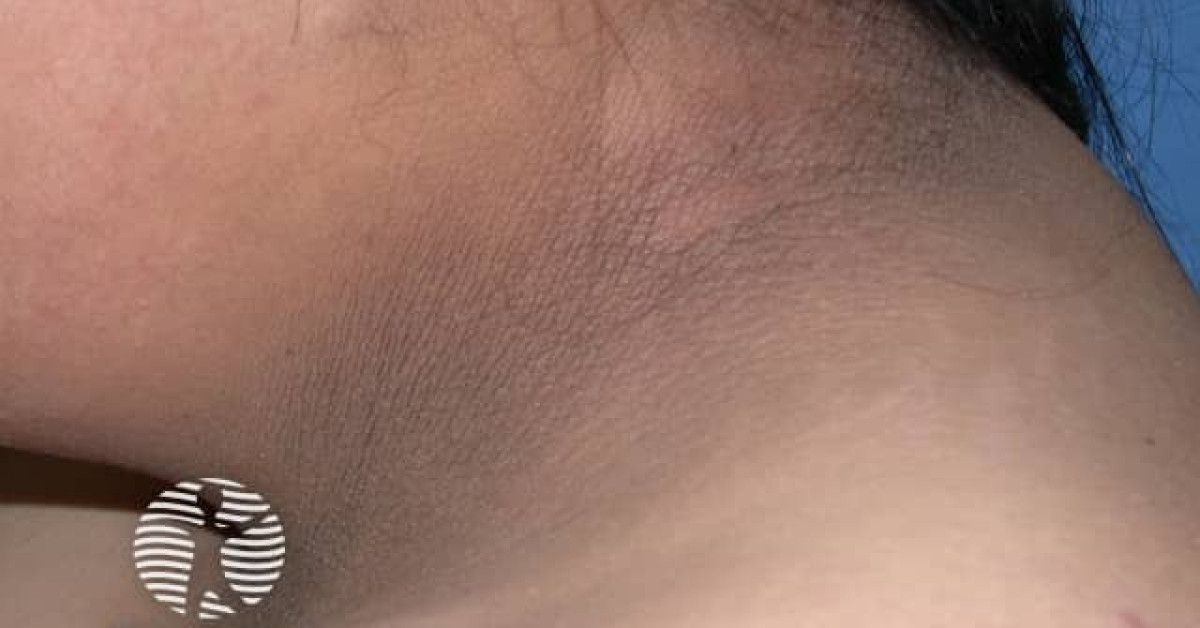
Acanthosis nigricans is a hyperpigmented, velvety thickening of the skin in body folds — neck, axillae, antecubital fossae, groin and umbilicus. The vast majority of cases reflect insulin resistance (obesity, type 2 diabetes, polycystic ovarian syndrome, metabolic syndrome) and are managed by addressing the underlying metabolic disturbance. The clinically critical minority is malignant acanthosis nigricans — an abrupt, extensive, often pruritic eruption with prominent mucosal involvement (oral, lip, tongue, palpebral conjunctiva, genital) and the "tripe palms" sign (velvety palmar thickening) — which is a recognised paraneoplastic syndrome of gastric adenocarcinoma (~55%) and other intra-abdominal adenocarcinomas (lung, hepatobiliary, GU, colorectal). Recognition of paraneoplastic features should trigger urgent age-appropriate cancer workup. The "Leser-Trélat sign" (sudden eruption of seborrhoeic keratoses) frequently co-exists.
Classification
- Insulin-resistance / metabolic AN — the commonest pattern: obesity, type 2 diabetes, PCOS, metabolic syndrome and related endocrine states.
- Syndromic / genetic AN — for example HAIR-AN, severe insulin-receptor defects, Crouzon syndrome with acanthosis nigricans, Costello syndrome and other rare developmental syndromes.
- Drug-induced AN — described with nicotinic acid, corticosteroids, growth hormone, oral contraceptives and targeted / immune therapies in susceptible patients.
- Malignant (paraneoplastic) AN — adult-onset abrupt extensive eruption with mucosal involvement and "tripe palms"; classically gastric adenocarcinoma but other adenocarcinomas reported.
- Hereditary benign AN — rare, usually childhood-onset familial disease without metabolic, endocrine or malignant driver.
Clinical features
- Symmetrical hyperpigmented, velvety thickening with accentuation of skin lines.
- Distribution — neck (especially posterior / lateral), axillae, antecubital fossae, popliteal fossae, groin, umbilicus, vulva, scrotum.
- Skin tags often coexist (acrochordon).
- Malignant acanthosis nigricans red flags:
- Adult-onset (especially >40).
- Abrupt, rapidly evolving eruption.
- Extensive distribution involving atypical sites (palms / soles, mucosal surfaces).
- Prominent mucosal involvement — lip, oral (tongue, buccal), palpebral conjunctiva, genital.
- "Tripe palms" — velvety palmar thickening with rugose surface (very strong paraneoplastic association).
- Pruritus — prominent in malignant variant.
- Concurrent sign of Leser-Trélat (eruptive seborrhoeic keratoses).
- Weight loss, anaemia, occult GI symptoms.
Pathogenesis
- Benign / metabolic forms — hyperinsulinaemia activates IGF-1 receptors on keratinocytes and fibroblasts, driving proliferation and pigmentation.
- Malignant form — tumour-derived TGF-α and other growth factors stimulate epidermal hyperplasia and pigmentation. The paraneoplastic eruption typically precedes, parallels, or follows the underlying tumour, and may regress with successful tumour treatment.
Workup for paraneoplastic AN
- Detailed history and examination — weight loss, abdominal symptoms, GI / GU symptoms, smoking, family history.
- Suspected malignant AN:
- FBC, U&E, LFT, calcium, glucose, HbA1c.
- Tumour markers (CEA, CA19-9, CA125, AFP, PSA — guided by symptoms).
- Faecal occult blood test / FIT.
- Upper GI endoscopy — gastric adenocarcinoma is the commonest paraneoplastic association.
- CT chest/abdomen/pelvis.
- Mammography (women); cervical screening up to date.
- Colonoscopy.
- Pelvic / transvaginal ultrasound (women); testicular USS (men).
- Skin biopsy not diagnostic of paraneoplastic vs benign — clinical assessment is the discriminator.
- Suspected metabolic AN — fasting glucose, HbA1c, fasting insulin, lipids, BMI, PCOS workup in women.
Management
- Treat the underlying cause — weight loss, glycaemic control, treat endocrine disorder, withdraw offending drug.
- Paraneoplastic AN — treat the underlying malignancy; cutaneous changes often regress with successful tumour control and recur with relapse.
- Symptomatic skin care:
- Topical retinoids (tretinoin, adapalene).
- Topical 12% ammonium lactate or salicylic acid keratolytic.
- Topical / oral metformin for insulin-resistance-driven AN.
- Cosmetic camouflage.
- Counsel about prognostic implications of paraneoplastic AN — frequently signals advanced underlying malignancy.
References
- Higgins SP et al. Acanthosis nigricans — a practical approach to evaluation and management. Dermatol Online J; 2008.
- Pentenero M et al. Oral acanthosis nigricans — review. Oral Dis; 2018.
Spot a correction?
If any clinical statement, citation or link on this page needs updating, please email admin@skinoncology.net with the page name, the proposed correction and the supporting source.