

Paraneoplastic pemphigus
PNP; paraneoplastic autoimmune multi-organ syndrome (PAMS); "Anhalt syndrome" (older eponym after the original 1990 description)
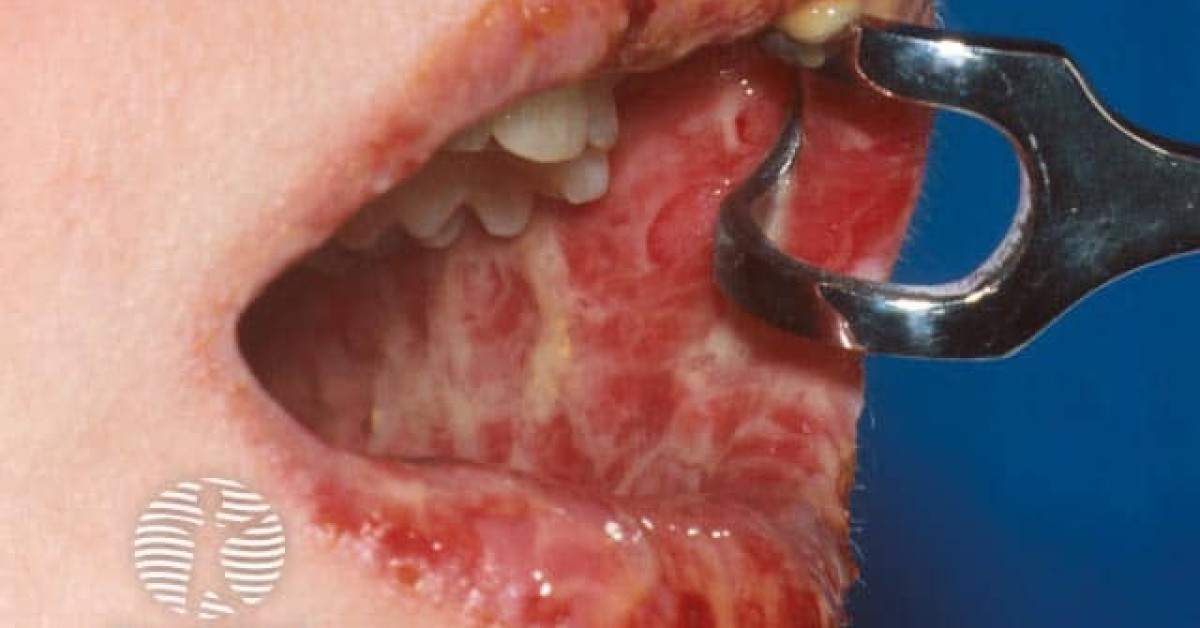
Paraneoplastic pemphigus is a rare, severe and frequently fatal autoimmune mucocutaneous blistering disease driven by autoantibodies against multiple plakin and desmoglein proteins, in association with an underlying — often previously occult — neoplasm. The most frequent associations are non-Hodgkin lymphoma, chronic lymphocytic leukaemia and Castleman disease, together accounting for ~85% of cases. Patients present with refractory severe painful stomatitis (often the dominant feature, mistaken initially for Stevens-Johnson syndrome or erythema multiforme major) and a polymorphic skin eruption with features overlapping pemphigus vulgaris, bullous pemphigoid, lichen planus, erythema multiforme and graft-versus-host disease. Bronchiolitis obliterans is the principal extracutaneous complication and the leading cause of death (mortality 75–90% overall). Immunoblot for anti-envoplakin and anti-periplakin antibodies and ELISA for desmoglein-3 are the most useful diagnostic tests. Treatment requires aggressive immunosuppression plus successful management of the underlying haematological malignancy.
Underlying neoplasms
- Non-Hodgkin lymphoma (~40%) — particularly low-grade B-cell lymphoma.
- Chronic lymphocytic leukaemia (~30%).
- Castleman disease (~10%) — particularly in younger patients; PNP may be the presenting feature.
- Thymoma (~5%).
- Sarcoma (~5%, especially follicular dendritic cell sarcoma in Asian populations).
- Carcinoma — <5% (lung, breast, pancreas, GI, GU).
- Waldenström macroglobulinaemia, monoclonal gammopathy — uncommon.
- In ~30% of cases, paraneoplastic pemphigus is the presenting feature of the malignancy.
Clinical features
- Severe painful intractable stomatitis — almost universal; often the dominant and presenting feature.
- Erosive, ulcerative oral and lip lesions.
- Refractory to topical / systemic corticosteroids.
- Difficulty eating, drinking and speaking.
- Severe pain disproportionate to the visible lesions.
- Frequently mistaken initially for Stevens-Johnson syndrome, erosive lichen planus, herpes simplex or aphthous ulcers.
- Polymorphic cutaneous eruption — features overlap multiple blistering / inflammatory diseases:
- Pemphigus vulgaris-like flaccid bullae and erosions.
- Bullous pemphigoid-like tense bullae.
- Erythema multiforme-like targetoid lesions on palms / soles.
- Lichen planus-like flat-topped violaceous papules.
- Graft-versus-host disease-like (lichenoid + sclerotic) lesions.
- Conjunctival involvement — pseudomembranous conjunctivitis with scarring.
- Genital involvement — common.
- Bronchiolitis obliterans — autoimmune attack on bronchial epithelium; progressive small-airways obstruction; the leading cause of death; refractory to treatment.
- Median age 45–70; both sexes.
Diagnosis
- Skin / mucosal biopsy — combined acantholysis and interface dermatitis (PV-like + EM-like + LP-like features); apoptotic keratinocytes through epidermis.
- Direct immunofluorescence — IgG and complement deposition both intercellular (PV-like) and along the basement-membrane zone (BP-like) — characteristic combined pattern.
- Indirect immunofluorescence — positive on rat bladder epithelium (highly specific — bladder epithelium expresses plakin family proteins shared with stratified squamous epithelium).
- Immunoblot / immunoprecipitation — anti-envoplakin (210 kDa) and anti-periplakin (190 kDa) autoantibodies — most useful diagnostic test.
- ELISA — anti-desmoglein-3 frequently positive; anti-desmoglein-1 variable.
- Workup for underlying neoplasm — FBC, peripheral blood film, flow cytometry, CT chest/abdomen/pelvis, bone marrow biopsy, lymph-node biopsy, tumour markers.
- Refer to dermatology / haematology / oncology MDT.
Management
- Treat the underlying neoplasm:
- Castleman disease — surgical resection if unicentric (often curative for the PNP).
- Non-Hodgkin lymphoma / CLL — rituximab, chemotherapy, targeted therapy per haematology MDT.
- Sarcoma / thymoma — surgical resection.
- Immunosuppression for skin / mucosal disease — refractory to monotherapy; usually requires multiple agents:
- High-dose corticosteroid (prednisolone 1–2 mg/kg/day or pulsed methylprednisolone).
- Rituximab (anti-CD20) — first-line steroid-sparing in most series.
- IVIg.
- Plasmapheresis.
- Cyclophosphamide, mycophenolate, ciclosporin.
- Daclizumab, alemtuzumab — refractory cases.
- Supportive care — nutritional support (frequently NG / PEG feeding), analgesia, infection prophylaxis, ophthalmology and respiratory monitoring.
- Bronchiolitis obliterans — refractory to therapy; supportive care; lung transplantation rarely successful in this immunocompromised population.
Prognosis
Poor — overall mortality 75–90%; deaths are mostly from sepsis, multiorgan failure, bronchiolitis obliterans or progression of the underlying malignancy. Best outcomes in patients with resectable Castleman disease, where surgical excision can produce remission. The course is dominated by refractory mucositis, infection and pulmonary disease.
References
- Anhalt GJ et al. Paraneoplastic pemphigus — an autoimmune mucocutaneous disease associated with neoplasia. N Engl J Med; 1990.
- Czernik A et al. Paraneoplastic autoimmune multiorgan syndrome — review. J Eur Acad Dermatol Venereol; 2011.
Spot a correction?
If any clinical statement, citation or link on this page needs updating, please email admin@skinoncology.net with the page name, the proposed correction and the supporting source.