

Trichilemmoma
Tricholemmoma; trichilemmal proliferation; "PTEN-trichilemmoma" (when in Cowden syndrome)
Trichilemmoma is a benign adnexal tumour with differentiation toward the outer root sheath of the hair follicle. The classical solitary lesion is a small skin-coloured to pink-tan papule on the face of an adult — usually clinically dismissed as a wart, fibrous papule or BCC and only diagnosed on histology after excision. The clinically critical scenario is that of multiple facial trichilemmomas, which are pathognomonic of Cowden syndrome / PTEN hamartoma tumour syndrome (PHTS) — a major cancer-predisposition syndrome with substantially elevated cancer risks, especially female breast cancer (cohort estimates about 67–85%). Recognition of multiple trichilemmomas is therefore a major diagnostic opportunity for clinical genetics referral and life-saving cancer surveillance.
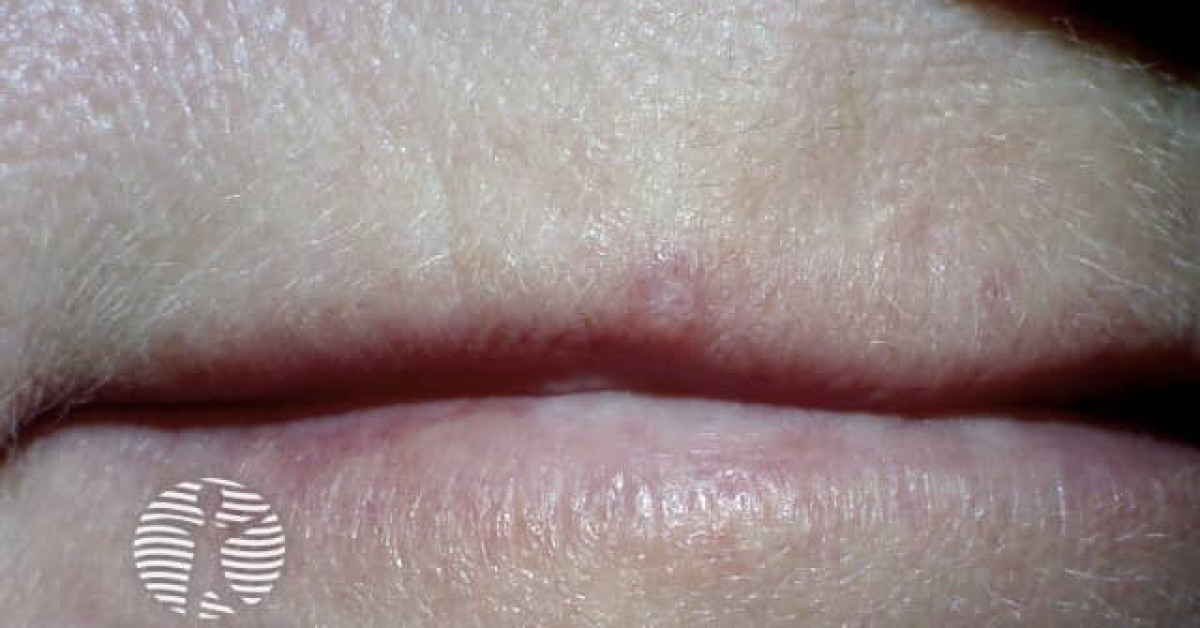
Clinical features
- Small (1–5 mm), skin-coloured to pink-tan papule, sometimes hyperkeratotic, often around the nose, periorificial face and upper lip.
- Usually multiple in syndromic context; solitary in sporadic cases.
- Median age — adolescence to adulthood; both sexes.
- Often clinically misdiagnosed as wart, fibrous papule, sebaceous hyperplasia, BCC, syringoma.
- The single solitary trichilemmoma is a clinical curiosity and is rarely diagnosed pre-operatively; multiple lesions are the clinically important presentation.
Histology
- Lobular proliferation of glycogen-rich, clear / pale-staining keratinocytes extending downward from the epidermis, often in continuity with a follicular infundibulum.
- Peripheral palisading of basal-cell-like cells with a thickened, eosinophilic, PAS-positive basement-membrane material — recapitulating the outer root sheath.
- Trichilemmal-type keratinisation (abrupt, without keratohyaline granules).
- No atypia, mitoses or necrosis in benign trichilemmoma.
- Differential by histology: trichilemmal carcinoma (atypia, mitoses, infiltrative growth); inverted follicular keratosis; clear-cell BCC.
Multiple trichilemmomas → Cowden syndrome
- Multiple facial trichilemmomas are pathognomonic of Cowden syndrome / PTEN hamartoma tumour syndrome (PHTS) — particularly when concentrated periorificially and accompanied by oral cobblestoning, palmoplantar pits and acral keratoses.
- Cowden syndrome — autosomal dominant cancer-predisposition syndrome with markedly elevated cancer risks, with estimates varying by cohort and ascertainment:
- Breast carcinoma — about 67–85% in women.
- Epithelial thyroid carcinoma — about 6–38%.
- Endometrial carcinoma — about 19–28%.
- Renal cell carcinoma — about 2–34%.
- Colorectal cancer and melanoma — increased above population baseline.
- Multiple trichilemmomas in a young adult should always trigger:
- Comprehensive history and examination for other Cowden features (oral cobblestoning, macrocephaly, cutaneous facial papules, palmoplantar pits).
- Family history.
- Referral to clinical genetics for germline PTEN testing.
- Implementation of NCCN-aligned cancer surveillance — see Cowden syndrome.
Management
- Solitary trichilemmoma — excisional biopsy with full histology; modest margin sufficient.
- Multiple trichilemmomas — destructive treatments for cosmesis (CO₂ laser, cryotherapy, electrosurgery, dermabrasion, shave); recurrence common.
- Topical / oral retinoids may suppress lesion development in syndromic patients.
- Genetic counselling and germline PTEN testing for any patient with multiple trichilemmomas.
- Implementation of cancer surveillance — see Cowden syndrome.
References
- Hanssen AM, Fryns JP. Cowden syndrome. J Med Genet; 1995.
- Schaffer JV et al. Mucocutaneous neoplasms in patients with Cowden syndrome — review. J Am Acad Dermatol; 2006.
Spot a correction?
If any clinical statement, citation or link on this page needs updating, please email admin@skinoncology.net with the page name, the proposed correction and the supporting source.