

EndocrineGraves diseaseICD-10 E05.9 / L98.5
Pretibial myxoedema
Localised myxoedema · thyroid dermopathy
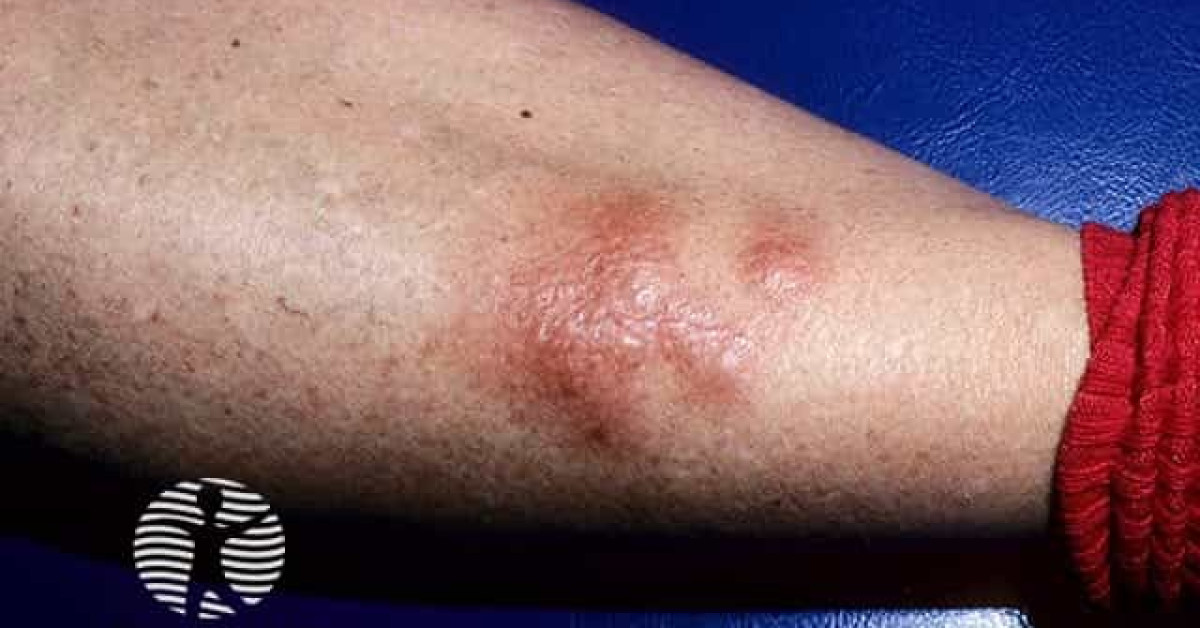
Pretibial myxoedema is a cutaneous manifestation of autoimmune thyroid disease, most commonly Graves disease, occurring in 1-5% of Graves patients and almost always in association with thyroid eye disease. It is characterised by symmetric pretibial accumulation of glycosaminoglycans (hyaluronic acid) producing waxy plaques / nodules. It is an important DDx for necrobiosis lipoidica, lipodermatosclerosis, elephantiasis nostras and chronic lymphoedema in skin-oncology practice.
CurrentLast reviewed 16 May 2026
Pathogenesis
- TSH-receptor antibodies (TRAb) stimulate fibroblasts; cross-react with shin fibroblasts → glycosaminoglycan / hyaluronic acid accumulation.
- Strong association with Graves disease — usually post-treatment, when hyperthyroidism may be controlled.
- Concomitant ophthalmopathy (Graves orbitopathy) in ≥95%; thyroid acropachy is uncommon, present in only a minority.
- Rarely occurs in Hashimoto thyroiditis.
Clinical features
- Symmetric pretibial waxy infiltrated plaques and nodules; yellow-brown or pink; non-pitting.
- Variants: diffuse, plaque-type, nodular, elephantiasis-like.
- Sites: pretibial (commonest), dorsum foot, face, upper limbs (rare).
- Peau d'orange surface; coarse hair, hyperhidrosis on overlying skin.
- Pruritus / discomfort variable.
- Concurrent Graves: exophthalmos, lid lag, goitre, tachycardia, thyroid bruit; thyroid acropachy (clubbing + soft-tissue swelling + periosteal reaction).
Differentials
- Necrobiosis lipoidica — yellow-brown atrophic plaques; pretibial; ulceration; diabetes.
- Lipodermatosclerosis — bilateral "inverted champagne bottle"; chronic venous insufficiency.
- Lymphoedema / elephantiasis — pitting acutely; non-pitting late.
- Mucinoses — generalised papular mucinosis, scleromyxoedema.
- Granuloma annulare (deep).
- Cellulitis.
Investigations
- TFT (T3, T4, TSH), TRAb / thyroid-stimulating immunoglobulins.
- Skin biopsy: dermal mucin (Alcian blue positive), fibrosis, mast cells.
- Ophthalmology review if visual symptoms; orbital MRI / CT.
- Radiographs if thyroid acropachy suspected.
Management
- Optimise thyroid status (does not always resolve dermopathy).
- Topical: super-potent corticosteroid (clobetasol propionate 0.05%) under occlusion; intralesional triamcinolone 5-10 mg/mL.
- Compression: graduated stocking / multilayer bandaging.
- Refractory: IVIG, rituximab, plasmapheresis, octreotide, pentoxifylline — limited evidence; specialist setting.
- Severe elephantiasic disease: surgical debulking with caution; high recurrence.
- Smoking cessation (also improves orbitopathy).
- Multidisciplinary care: endocrinology, ophthalmology, dermatology.
References
- Schwartz KM et al. Dermopathy of Graves disease (pretibial myxedema): long-term outcome. J Clin Endocrinol Metab. 2002;87:438-446.
- Heyes C et al. Pretibial myxedema: a review of the literature and current treatment options. Am J Clin Dermatol. 2018;19:51-65.
- Fatourechi V. Thyroid dermopathy and acropachy. Best Pract Res Clin Endocrinol Metab. 2012;26:553-565.
Spot a correction?
If any clinical statement, citation or link on this page needs updating, please email admin@skinoncology.net with the page name, the proposed correction and the supporting source.