

InfectionVZV reactivationICD-10 B02.x
Herpes zoster
Shingles · VZV reactivation
Herpes zoster (shingles) is dermatomal reactivation of latent varicella-zoster virus (VZV) in cranial / dorsal-root ganglia. It is far more common in adults >50, the immunosuppressed, including patients on chemotherapy, biologics, JAK inhibitors and immune-checkpoint inhibitors. UK skin-oncology relevance is fourfold: (1) ICI-related reactivation, (2) disseminated zoster in advanced disease, (3) post-herpetic neuralgia as a chronic morbidity, and (4) routine vaccination (Shingrix) for at-risk patients per UK Green Book.
CurrentLast reviewed 16 May 2026
Biology and risk
- Primary infection (chickenpox) establishes latent VZV in cranial / dorsal-root ganglia.
- Reactivation occurs with declining cell-mediated immunity; lifetime risk ~30%.
- Risk factors: age >50, immunosuppression (HIV, malignancy, chemotherapy, biologics, JAK inhibitors, ICI, stem-cell transplant), diabetes, stress.
Clinical features
- Prodrome 2-3 days of pain, burning, itch, paraesthesia in the affected dermatome.
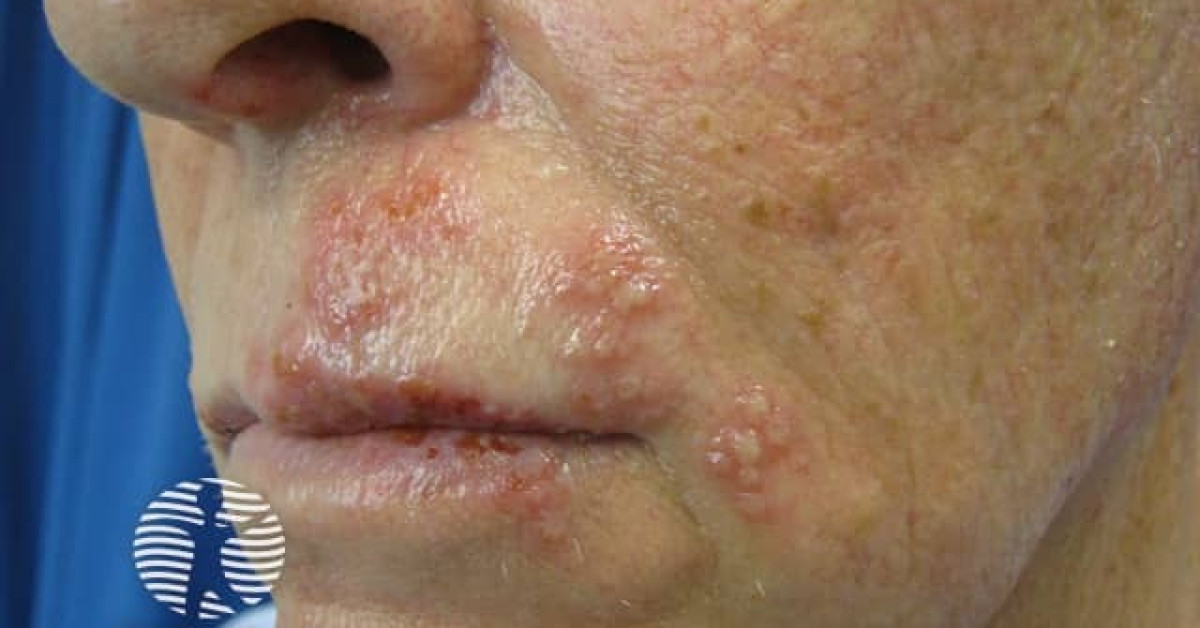
- Eruption: grouped erythematous papules → vesicles → pustules → crusts in 7-10 days, in a unilateral dermatomal distribution.
- Commonest dermatomes: thoracic (T3-L2), trigeminal V1 (herpes zoster ophthalmicus — ophthalmology emergency).
- Special variants:
- Herpes zoster ophthalmicus — V1 distribution; Hutchinson sign (nasociliary nerve, tip of nose) predicts ocular involvement.
- Ramsay Hunt syndrome (zoster oticus) — facial nerve palsy + vesicles in external auditory canal / tympanic membrane + hearing loss.
- Disseminated zoster — >20 vesicles outside the primary dermatome; immunosuppressed.
- Multidermatomal zoster — adjacent dermatomes; often immunosuppression.
- Complications:
- Post-herpetic neuralgia (~10-20% >50 y).
- Secondary bacterial infection.
- Encephalitis, myelitis, stroke (VZV vasculopathy).
- Scarring, post-inflammatory pigment change.
Investigations
- Clinical diagnosis in classical presentation.
- VZV PCR from vesicle base swab — most sensitive.
- Tzanck smear (multinucleated giant cells; non-specific HSV/VZV).
- Direct fluorescent antibody.
- HIV testing in young / atypical / disseminated cases.
- If trigeminal V1: urgent ophthalmology referral.
Differentials
- Herpes simplex (zosteriform) — recurrent at same site.
- Contact dermatitis, irritant linear eruption.
- Cellulitis, erysipelas.
- Linear cutaneous mastocytosis, urticarial vasculitis.
- Bullous pemphigoid (localised), dermatitis herpetiformis.
- Disseminated zoster vs varicella vs widespread HSV.
Management
- Antiviral within 72 hours of rash onset reduces pain duration and PHN risk:
- Aciclovir 800 mg PO 5× daily for 7 days.
- Valaciclovir 1 g PO TDS for 7 days.
- Famciclovir 500 mg PO TDS for 7 days.
- IV aciclovir 10 mg/kg TDS in immunosuppressed, disseminated, ophthalmic, CNS involvement.
- Analgesia: paracetamol, NSAIDs; opioid step-up; gabapentin / pregabalin / amitriptyline / nortriptyline for neuropathic pain.
- Topical: bland emollient, calamine; capsaicin / lidocaine 5% plaster for PHN.
- Ophthalmology referral for HZ ophthalmicus; ENT for Ramsay Hunt.
- Vaccination:
- Shingrix (adjuvanted recombinant subunit VZV) — UK Green Book offers from age 65 in the routine programme, and from age 18 for people who are severely immunosuppressed; two-dose schedule.
- Zostavax (live-attenuated) being phased out in UK.
- Skin-oncology specifics:
- ICI-related zoster — treat antiviral; usually do not stop ICI for typical zoster (G1-2); G3+ disseminated → hold ICI, oncology / ID review.
- Chemotherapy / biologics: aciclovir prophylaxis sometimes given (allogeneic HSCT).
References
- Cohen JI. Clinical practice: herpes zoster. N Engl J Med. 2013;369:255-263.
- UK Health Security Agency. Immunisation against infectious disease (the Green Book): Chapter 28A — Shingles. London: UKHSA; last updated 19 August 2025.
- NICE CKS. Shingles. London: NICE; accessed 18 May 2026.
- Lal H et al. Efficacy of an adjuvanted herpes zoster subunit vaccine in older adults. N Engl J Med. 2015;372:2087-2096.
Spot a correction?
If any clinical statement, citation or link on this page needs updating, please email admin@skinoncology.net with the page name, the proposed correction and the supporting source.