

InflammatoryCommonICD-10 L30.0
Discoid eczema
Nummular eczema · nummular dermatitis · discoid dermatitis
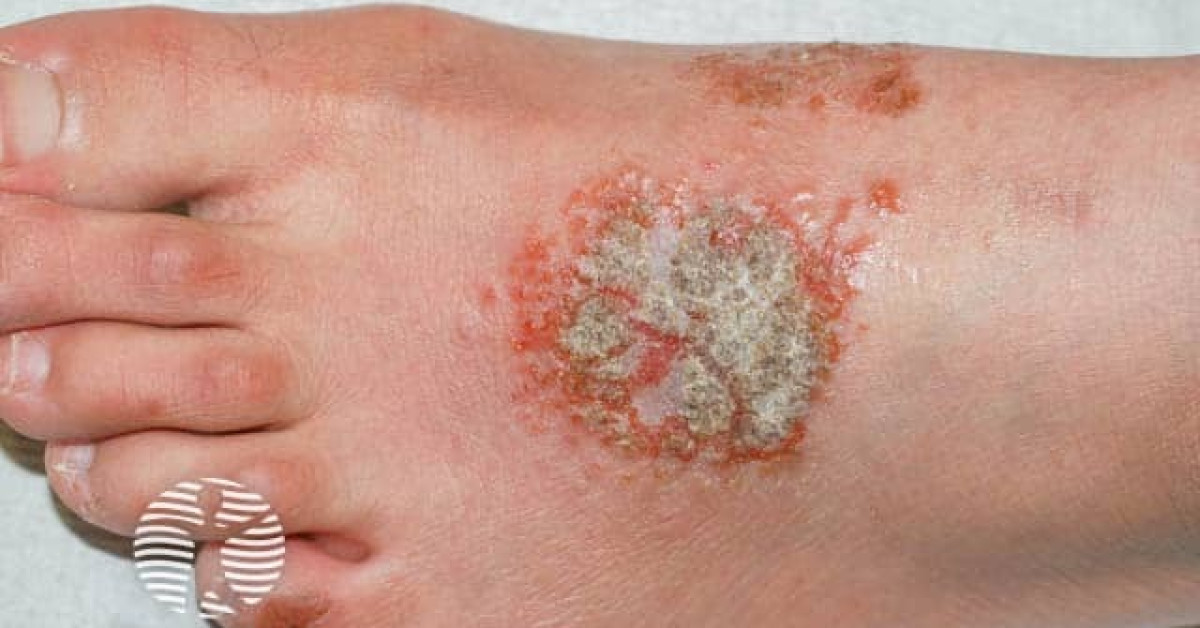
Discoid eczema is a chronic-relapsing eczematous dermatitis characterised by discrete, coin-shaped pruritic plaques most commonly on the limbs. It affects ~0.1-0.2% of the UK population, peaking in middle-aged and elderly adults. It is a common DDx for tinea, psoriasis, contact dermatitis and mycosis fungoides. It is also a frequent reason for biopsy when refractory or asymmetric, and a known phenotype of EGFRi / BRAFi / ICI cutaneous reactions.
CurrentLast reviewed 16 May 2026
Pathogenesis
- Multifactorial:
- Atopic background — overlap with atopic eczema.
- Skin barrier dysfunction.
- Staphylococcus aureus over-colonisation.
- Cold, dry climate; low humidity (winter eczema).
- Drug-induced: hydrochlorothiazide, methyldopa, gold, retinoids, interferons, EGFRi.
- Older adults disproportionately affected.
Clinical features
- Coin-shaped (nummular) erythematous well-demarcated plaques, 1-10 cm diameter.
- Vesicular / oozing acutely; lichenified chronically.
- Distribution: limb extensors (commonest), trunk, hands, lower legs.
- Intense pruritus.
- Chronic-relapsing course; commonly bilateral and symmetric.
- Often secondarily impetiginised (S. aureus).
Differentials
- Tinea corporis — advancing scaling edge with central clearing; KOH+.
- Psoriasis — silvery scale, sharply demarcated, Auspitz, nail involvement.
- Atopic eczema — atopic background, flexural distribution.
- Pityriasis rosea — herald patch, Christmas tree, collarette scale.
- Mycosis fungoides — chronic, asymmetric, sun-protected; biopsy + TCR.
- Contact dermatitis — exposure-related.
- Bowen disease — keratotic, fixed plaque.
- Sub-acute lupus erythematosus.
- Drug-induced eczematous eruption (EGFRi, BRAFi, ICI).
Investigations
- Clinical diagnosis usually adequate.
- KOH if tinea suspected.
- Bacterial swab if oozing / pustular (S. aureus colonisation).
- Skin biopsy in atypical / persistent / asymmetric lesions to exclude MF, psoriasis, Bowen.
- Patch testing if contact dermatitis suspected (especially asymmetric or related to nickel-belt-buckle or footwear).
- Drug history (HCTZ, gold, IFN, EGFRi, BRAFi).
Management
- General:
- Bland emollients liberally; avoid soap; soap substitute.
- Humidify environment.
- Topical:
- Potent topical corticosteroid (clobetasol propionate, betamethasone valerate) 2-4 weeks; taper.
- Topical calcineurin inhibitors — steroid-sparing.
- Coal-tar containing combinations for chronic lichenified plaques.
- Bacterial superinfection: oral flucloxacillin / erythromycin / clarithromycin 7 days; topical fusidic acid (avoid prolonged courses).
- Phototherapy: NBUVB if widespread / refractory.
- Systemic: methotrexate, ciclosporin, azathioprine, mycophenolate if refractory.
- Dupilumab: emerging evidence in the nummular / discoid eczema phenotype where disease overlaps with moderate-to-severe atopic dermatitis; confirm local specialist access and commissioning route.
- Counsel on chronic-relapsing course and trigger avoidance.
References
- Bonamonte D et al. Nosological position of discoid eczema. Acta Derm Venereol. 2012;92:586-589.
- Ozkaya E. Adult-onset atopic dermatitis. J Am Acad Dermatol. 2005;52:579-582.
- NICE CKS. Eczema — atopic. London: NICE; accessed 18 May 2026.
- Bonamonte D et al. Topical management of nummular dermatitis. Dermatitis. 2008;19:204-208.
Spot a correction?
If any clinical statement, citation or link on this page needs updating, please email admin@skinoncology.net with the page name, the proposed correction and the supporting source.