

Neurofibromatosis type 1
NF1; von Recklinghausen disease (older eponym, less commonly used); peripheral neurofibromatosis
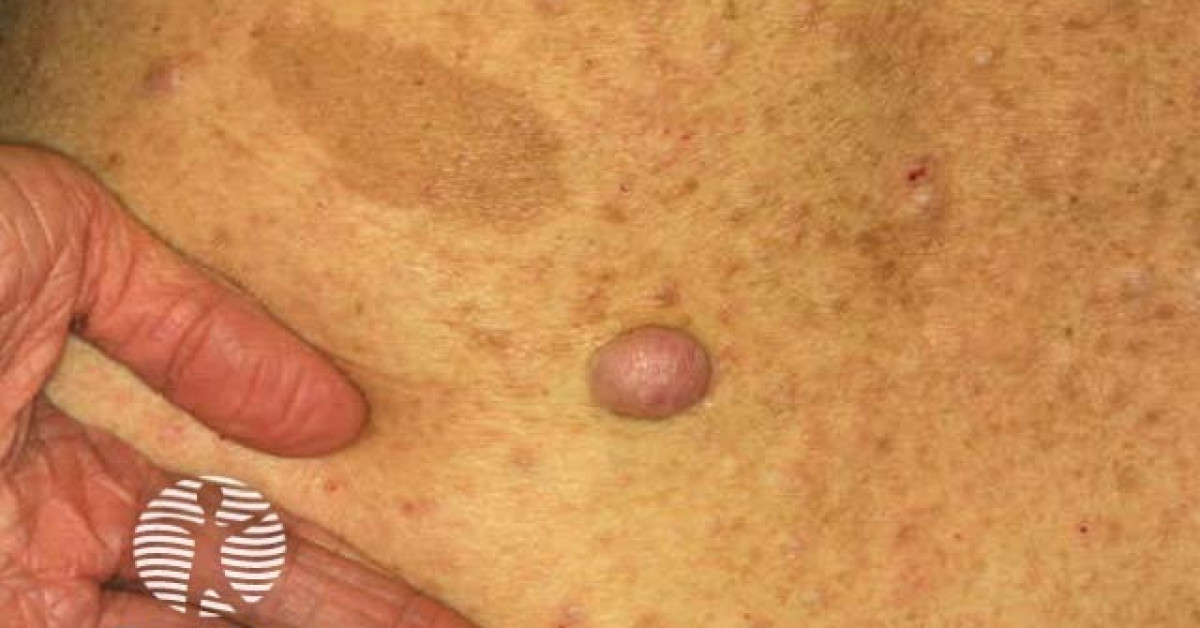
Neurofibromatosis type 1 is one of the commonest single-gene cancer-predisposition syndromes (UK prevalence ~1 in 2,500–3,500), caused by germline loss-of-function mutations of the NF1 tumour-suppressor gene encoding neurofibromin — a negative regulator of RAS signalling. Cardinal cutaneous features (café-au-lait macules, axillary / inguinal freckling, neurofibromas, plexiform neurofibromas) and ophthalmic features (Lisch nodules, optic-pathway glioma) develop progressively from infancy. The lifetime cancer risk is substantially elevated — most importantly malignant peripheral nerve sheath tumour (MPNST), which arises in ~8–13% of NF1 patients (vs near-zero in the general population) and is the leading cause of NF1 cancer mortality. The MEK inhibitor selumetinib (NICE HST20) is approved through NICE's Highly Specialised Technologies route for symptomatic inoperable plexiform neurofibromas in children with NF1.
Genetics
- Germline loss-of-function mutations of NF1 on chromosome 17q11.2 — encodes neurofibromin, a GTPase-activating protein that switches off Ras signalling.
- Loss of neurofibromin → unrestrained Ras-MAPK and PI3K-mTOR signalling → tumour formation.
- Autosomal dominant; ~50% sporadic (de novo), ~50% inherited.
- Highly variable expressivity even within families; complete penetrance by age 5.
- Confirm by clinical criteria (Legius et al. 2021 revised diagnostic criteria; see below) or germline NF1 testing.
- Important paediatric differential when only pigmentary criteria are met: Legius syndrome (germline SPRED1 mutation) — cafe-au-lait macules and freckling without neurofibromas, Lisch nodules, optic glioma, osseous lesions or cancer predisposition. Consider SPRED1 testing in children with isolated pigmentary features.
Diagnostic criteria (Legius 2021 revised, NF1)
Legius et al. 2021 (Genet Med) updated the 1987/1988 NIH criteria. In an individual without a parent meeting NF1 criteria, diagnosis requires two or more of:
- Café-au-lait macules — ≥6, >5 mm pre-puberty or >15 mm post-puberty.
- Axillary or inguinal freckling ("Crowe's sign"). Note: café-au-lait macules and freckling together count as a single criterion.
- Neurofibromas — ≥2 cutaneous neurofibromas of any type, or 1 plexiform neurofibroma.
- Optic pathway glioma.
- Lisch nodules ≥2, OR ≥2 choroidal abnormalities on OCT or near-infrared imaging (newly added in 2021).
- Distinctive osseous lesion — sphenoid wing dysplasia, anterolateral bowing of the tibia, or pseudarthrosis of a long bone.
- A heterozygous pathogenic NF1 variant at ≥50% allele fraction in apparently normal tissue (newly added in 2021 as an independent diagnostic criterion).
For a child of a parent meeting NF1 criteria, a single criterion is sufficient.
Cutaneous findings — café-au-lait macules from birth → infantile axillary freckling → cutaneous neurofibromas from puberty (cumulating to dozens to thousands), plexiform neurofibromas (often congenital, locally infiltrative).
Associated cancer risk
- Malignant peripheral nerve sheath tumour (MPNST) — lifetime risk ~8–13%; most arise from pre-existing plexiform neurofibroma; 5-year survival 30–50%; the leading cause of NF1 cancer mortality.
- Optic pathway glioma — lifetime risk ~15%; mostly indolent in NF1 (vs aggressive sporadic) but some progress.
- Other CNS tumours — astrocytoma, brainstem glioma.
- Phaeochromocytoma / paraganglioma — lifetime risk ~5%.
- GIST — increased risk; often multifocal duodenal / jejunal.
- Breast cancer in women under 50 — risk approximately 5× general population.
- Juvenile myelomonocytic leukaemia — children.
- Rhabdomyosarcoma — children.
- Skin cancer risk overall is similar to baseline; melanoma risk modestly increased.
Surveillance & management
- Multidisciplinary care — paediatric / adult NF1 clinic, neurology, ophthalmology, plastic surgery, oncology, clinical genetics.
- Annual full physical and skin examination.
- Annual ophthalmology review including dilated fundoscopy from infancy.
- Annual blood pressure (phaeochromocytoma).
- Imaging — directed by symptoms (NOT routine whole-body MRI in asymptomatic patients per NICE / NHS England guidance, though this is debated).
- Cutaneous neurofibromas — surgical excision or CO₂ laser for symptomatic / disfiguring lesions.
- Plexiform neurofibroma:
- Surveillance with serial MRI for asymptomatic lesions.
- Surgery for symptomatic / cosmetically disfiguring lesions where resectable.
- Selumetinib (Koselugo, NICE HST20) — MEK inhibitor approved through the NICE Highly Specialised Technologies route for symptomatic inoperable plexiform neurofibromas in children aged ≥3 years.
- MPNST surveillance — counsel about new pain, rapid growth, neurological deficit in pre-existing plexiform NF; urgent imaging and biopsy. Any lesion behaving differently warrants MRI / FDG-PET-CT.
MPNST management
- Refer urgently to sarcoma MDT.
- Wide local excision with the largest feasible margins.
- Adjuvant radiotherapy for incomplete margins or large tumours.
- Chemotherapy (doxorubicin / ifosfamide) for advanced / metastatic disease — modest activity.
- Clinical trials of MEK inhibitors, immunotherapy, NTRK / ALK / RAF-MEK combination strategies.
- Genetic counselling for the patient and family.
References
- Gutmann DH et al. Neurofibromatosis type 1. Nat Rev Dis Primers; 2017.
- Legius E et al. Revised diagnostic criteria for neurofibromatosis type 1 and Legius syndrome: an international consensus recommendation. Genet Med; 2021;23:1506–1513.
- Gross AM et al. Selumetinib in children with inoperable plexiform neurofibromas (SPRINT). N Engl J Med; 2020.
- NICE HST20. Selumetinib for treating symptomatic and inoperable plexiform neurofibromas associated with type 1 neurofibromatosis in children aged 3 and over. London: NICE; accessed 18 May 2026.
Spot a correction?
If any clinical statement, citation or link on this page needs updating, please email admin@skinoncology.net with the page name, the proposed correction and the supporting source.