

Hypertrophic scar
Hypertrophic scarring; HTS
A hypertrophic scar is a raised, erythematous and pruritic scar that remains confined to the original wound margin — the key distinction from a keloid, which extends beyond it. Hypertrophic scarring affects ~ 35–75% of significant burns and a smaller proportion of surgical wounds, particularly in high-tension sites (back, deltoid, presternum), Fitzpatrick IV–VI skin, and after delayed wound healing. Most hypertrophic scars improve gradually over 1–2 years without intervention but cosmetic and symptomatic concerns are common. Treatment is largely conservative (silicone, pressure, steroid injection); aggressive intervention is reserved for refractory cases.
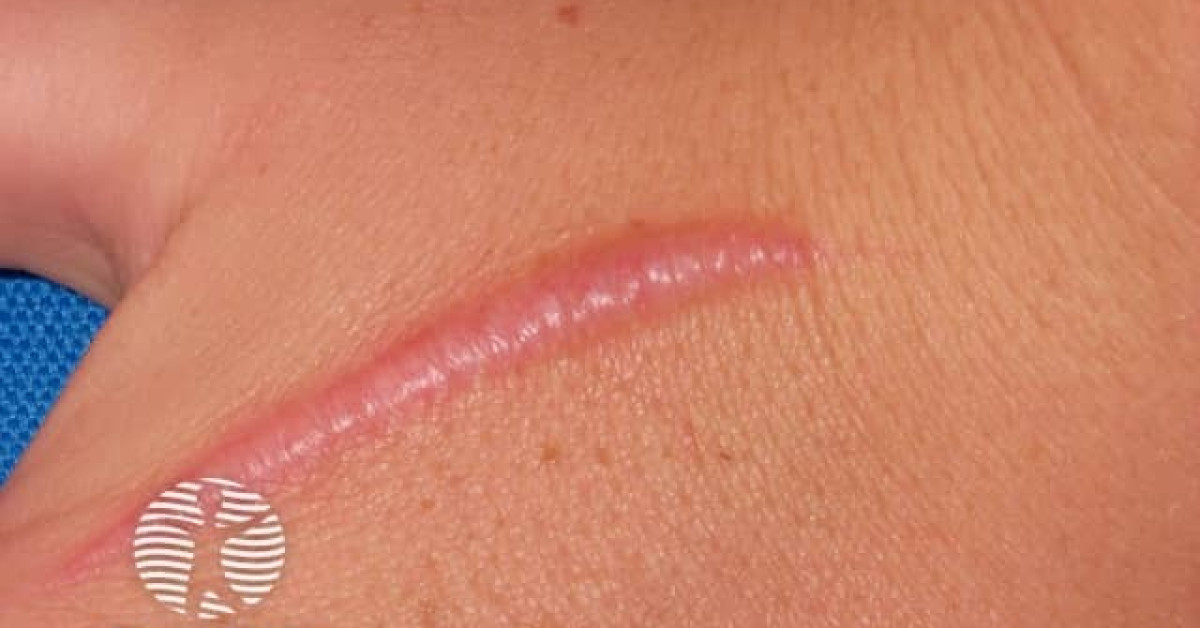
Clinical features
- Raised, firm, erythematous, sometimes pruritic or painful scar that respects the original wound margin.
- Develops 4–8 weeks after wounding; peaks 6–12 months; gradual improvement over 1–2 years.
- Common after burns, surgical wounds in high-tension sites, infected wounds, delayed healing.
- Common sites — chest, shoulders, upper back, deltoid, neck, forehead.
- Fitzpatrick IV–VI substantially more often affected and severely.
Distinguishing from keloid
- Hypertrophic scar — confined to wound margin; often regresses spontaneously; less aggressive.
- Keloid — extends beyond wound; persistent / progressive; high recurrence after surgery; more aggressive Rx required.
- Histologically — hypertrophic shows thicker collagen bundles with parallel orientation; keloid has thick, haphazardly arranged hyalinised collagen extending beyond the original injury.
Management
- First-line / preventative:
- Silicone sheet / gel — apply for ≥ 12 hours daily for at least 3 months; well-evidenced for prevention and reduction of established HTS.
- Pressure therapy — particularly post-burn (15–25 mmHg); compression garments worn 23/24 hours daily for 6–12 months.
- Massage and emollients.
- Second-line:
- Intralesional triamcinolone 10–40 mg/mL every 4–6 weeks for 3–6 cycles.
- Pulsed-dye laser (585 / 595 nm) — reduces erythema and pruritus; multiple sessions.
- Fractional ablative CO₂ laser — improves texture in older scars.
- Third-line / refractory:
- Z-plasty or W-plasty for contractures or scar realignment.
- Intralesional 5-FU.
- Skin grafting / flap revision for functional impairment.
- Patient education — most HTS improves over time; persistence with conservative measures.
References
- Mustoe TA et al. International clinical recommendations on scar management. Plast Reconstr Surg; 2002.
- Bombaro KM et al. What is the prevalence of hypertrophic scarring following burns? Burns; 2003.
Spot a correction?
If any clinical statement, citation or link on this page needs updating, please email admin@skinoncology.net with the page name, the proposed correction and the supporting source.