

Cutaneous arteriovenous malformation
AVM · cirsoid aneurysm · racemose haemangioma (obsolete) · arteriovenous fistula
Cutaneous arteriovenous malformations (AVMs) are congenital fast-flow vascular anomalies with direct shunting between arteries and veins, bypassing the capillary bed. They are uncommon but clinically important because they progress over the patient's lifetime through the Schobinger stages, can produce high-output cardiac failure, skin ulceration and life-threatening haemorrhage, and pose a significant therapeutic challenge. RASA1 mutations underlie hereditary capillary-malformation-AVM (CM-AVM) syndrome.
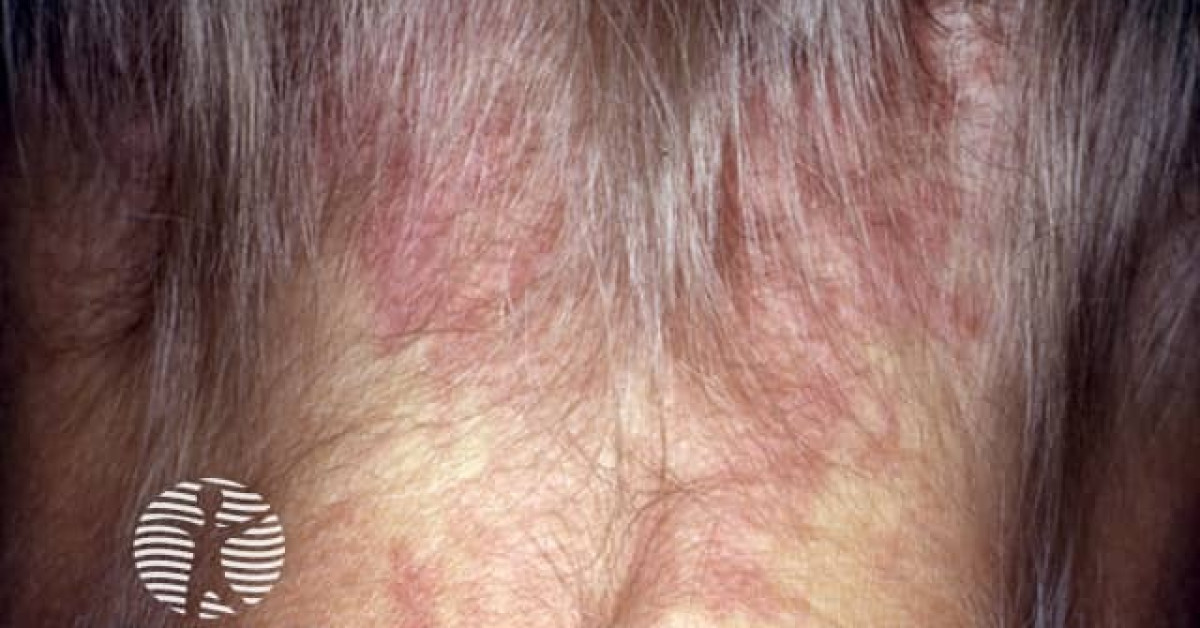
Pathogenesis and classification
- Direct arteriovenous shunting through a nidus, bypassing capillaries.
- Sporadic AVM: somatic activating mutations in MAP2K1 or KRAS.
- Capillary malformation-arteriovenous malformation syndrome (CM-AVM): autosomal dominant RASA1 mutations (CM-AVM1) or EPHB4 (CM-AVM2); multiple small CM with central tan spot ("white halo"), with risk of AVM in CNS, soft tissue, bone.
- Parkes-Weber syndrome — fast-flow capillary-AVM with limb overgrowth, RASA1-associated; distinct from the slow-flow Klippel-Trénaunay syndrome.
Schobinger staging
- Stage I (quiescent): warm, pink-blue patch; bruit / thrill; stable.
- Stage II (expansion): enlargement, pulsation, thrill, tortuous veins.
- Stage III (destruction): ulceration, bleeding, pain, necrosis.
- Stage IV (decompensation): cardiac failure due to high-output shunting.
Clinical features
- Warm, pulsatile, sometimes pink-blue plaque with bruit / thrill on auscultation.
- Predilection: head and neck (face, scalp, ear, oral); also limbs, trunk.
- Slow growth over years; rapid expansion with hormonal change (puberty, pregnancy), trauma, partial embolisation.
- Symptoms: pain, bleeding, ulceration, deformity.
- Hand: digital ischaemia, steal syndrome.
- Hereditary form: scattered small "capillary malformations" with tan halo + visceral AVMs.
Workup
- USS Doppler: high-flow vessels; differentiates from venous / lymphatic.
- MR angiography / CT angiography: maps feeding arteries and draining veins.
- Catheter angiography: gold standard for nidus and planning embolisation.
- Echocardiogram: assess cardiac output / overload.
- Genetic testing if multifocal — RASA1, EPHB4, MAP2K1, KRAS panel.
- Look for family members with CM + tan-halo lesions if suspected CM-AVM syndrome.
Management
- Schobinger I / asymptomatic: observe; avoid trauma; counsel about progression triggers.
- Schobinger II-III: combination treatment:
- Embolisation (transarterial / transvenous) — interventional radiology; ethanol, Onyx, NBCA glue, coils. Single-stage embolisation often inadequate; staged.
- Surgical resection usually combined with embolisation (24-72 h pre-op).
- Complete excision (with margin and nidus removal) gives best chance of cure.
- Schobinger IV (cardiac failure): emergency multidisciplinary intervention; transplant rarely indicated.
- Avoid partial / proximal ligation — accelerates recurrence and rebound expansion.
- Trametinib (MEK inhibitor) for KRAS / MAP2K1 mutant AVMs — emerging clinical-trial evidence.
- Multidisciplinary vascular-anomalies team essential (vascular surgery, plastics, interventional radiology, oncology, genetics).
References
- Schobinger RA. Personal experience with combined treatment of arteriovenous malformations. J Cardiovasc Surg. 1971;12:65-73.
- Eerola I et al. Capillary malformation-arteriovenous malformation, a new clinical and genetic disorder caused by RASA1 mutations. Am J Hum Genet. 2003;73:1240-1249.
- Couto JA et al. Somatic MAP2K1 mutations are associated with extracranial arteriovenous malformation. Am J Hum Genet. 2017;100:546-554.
- Liu AS et al. Extracranial arteriovenous malformations: natural progression and recurrence after treatment. Plast Reconstr Surg. 2010;125:1185-1194.
- ISSVA classification of vascular anomalies. Boston: ISSVA; 2018.
Spot a correction?
If any clinical statement, citation or link on this page needs updating, please email admin@skinoncology.net with the page name, the proposed correction and the supporting source.