

Ataxia-telangiectasia
AT; Louis-Bar syndrome (older eponym, particularly in European literature)
Ataxia-telangiectasia is an autosomal recessive multisystem disorder caused by biallelic loss-of-function mutations of the ATM (ataxia-telangiectasia-mutated) gene on chromosome 11q22.3, encoding the ATM kinase that orchestrates the cellular DNA damage response to double-strand breaks. The classical clinical tetrad — progressive cerebellar ataxia from early childhood, oculocutaneous telangiectasias developing on the bulbar conjunctiva and sun-exposed facial / ear skin from age 3–6, combined humoral and cellular immunodeficiency with recurrent sinopulmonary infections, and extreme radiosensitivity — combined with markedly elevated serum α-fetoprotein (the diagnostic biochemical clue) and absent ATM kinase function on Western blot or kinase assay, defines the syndrome. The lifetime cancer risk is ~30%, with disproportionate excess of haematological malignancy (T-cell ALL, T-PLL, NHL) in childhood and breast carcinoma in adult heterozygous carrier mothers. Conventional doses of radiotherapy and DNA-damaging chemotherapy can be fatal due to the radiosensitivity — careful dose modification is essential.
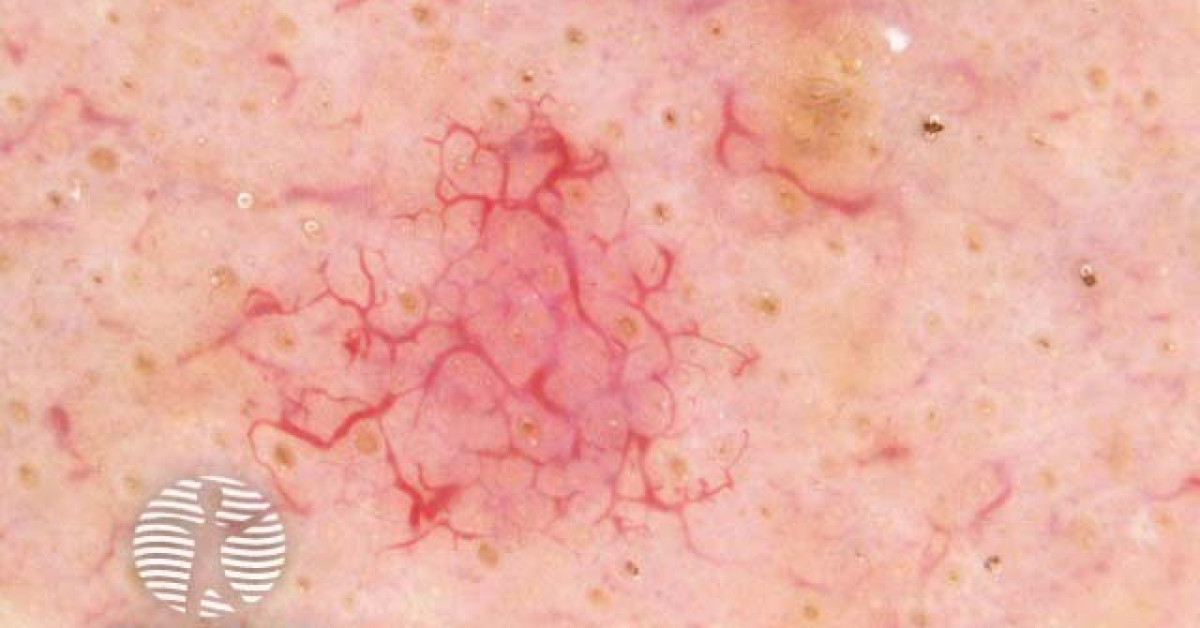
Genetics
- Biallelic loss-of-function mutations of ATM on chromosome 11q22.3 — encodes the ATM kinase, a master regulator of the cellular response to DNA double-strand breaks (homologous recombination, non-homologous end joining, cell-cycle checkpoint activation, p53 stabilisation, apoptosis induction).
- Autosomal recessive in affected patients.
- Heterozygous carrier mothers (~1% of the general population) have a 2–3-fold increased lifetime risk of breast carcinoma — clinically significant for cascade testing of unaffected female relatives.
- Diagnosis confirmed by:
- Markedly elevated serum α-fetoprotein (typically >10× normal) — the single most useful biochemical marker.
- Absent / reduced ATM kinase by Western blot or kinase assay on lymphocytes.
- Germline ATM sequencing.
- Radiosensitivity assays (chromosome breakage on cultured lymphocytes).
Cardinal clinical features
- Progressive cerebellar ataxia:
- Onset in early childhood, usually as toddler ataxia / unsteady gait.
- Wheelchair-bound by adolescence in most.
- Dysarthria, oculomotor apraxia.
- Oculocutaneous telangiectasias:
- Bulbar conjunctival telangiectasias developing from age 3–6 (the diagnostic clue in a child with ataxia).
- Cutaneous telangiectasias on sun-exposed face, ears, malar region.
- Café-au-lait macules.
- Premature greying.
- Combined immunodeficiency — recurrent sinopulmonary infections, IgA deficiency, IgG2 deficiency, lymphopenia.
- Extreme radiosensitivity — conventional radiotherapy and DNA-damaging chemotherapy doses can cause fatal toxicity.
- Endocrine — type 2 diabetes (~30%), hypogonadism, growth retardation.
- Other — pulmonary disease, swallowing dysfunction, dystonia, choreoathetosis.
Cancer risk
- Lifetime cancer risk in homozygotes ~30%; markedly elevated relative to general population.
- Childhood and adolescence:
- T-cell acute lymphoblastic leukaemia (T-ALL).
- T-cell prolymphocytic leukaemia (T-PLL).
- Non-Hodgkin lymphoma (B-cell, T-cell).
- Hodgkin lymphoma.
- Adulthood:
- Breast carcinoma — over-represented in homozygous patients and in heterozygous mothers.
- Cutaneous and head-and-neck SCC — increased risk, particularly post-radiotherapy.
- Gastric, colorectal, ovarian, melanoma — increased risk.
- Cancer is a leading cause of mortality (alongside respiratory failure from chronic pulmonary disease).
Surveillance & management
- Multidisciplinary care — paediatric neurology, immunology, oncology, dermatology, respiratory medicine, clinical genetics; lifelong (UK National AT Clinic at Papworth / Cambridge).
- Skin — annual full-skin examination; lifelong photoprotection; biopsy any new or changing lesion (cSCC risk increased); cosmetic management of facial telangiectasias as desired.
- Immunology — IVIg replacement for hypogammaglobulinaemia; antibiotic prophylaxis; vaccination (avoid live vaccines); monitor for opportunistic infections.
- Cancer surveillance:
- Annual physical examination including lymph nodes.
- Annual breast examination from late adolescence in females; consider MRI-based breast surveillance (avoiding mammography due to radiosensitivity) from age 25.
- FBC, peripheral blood film if symptomatic.
- Cascade testing of female heterozygous relatives — eligibility for enhanced breast surveillance.
- Cancer treatment — markedly enhanced normal-tissue radiosensitivity and chemotherapy toxicity:
- Avoid radiotherapy where possible; if essential, reduce dose substantially.
- Avoid alkylating agents and bleomycin; reduce all chemotherapy doses; close haematological / pulmonary monitoring.
- Surgery is the cornerstone for solid tumours.
- Anti-PD-1 immunotherapy emerging.
- Genetic counselling and cascade testing of all relatives.
References
- Rothblum-Oviatt C et al. Ataxia telangiectasia — review. Orphanet J Rare Dis; 2016.
- van Os NJH et al. Ataxia-telangiectasia — recent advances. Hum Genet; 2016.
Spot a correction?
If any clinical statement, citation or link on this page needs updating, please email admin@skinoncology.net with the page name, the proposed correction and the supporting source.