

Anal squamous cell carcinoma
Anal cancer; anal canal SCC; AIN-derived anal cancer
Anal squamous cell carcinoma is HPV-driven in ~ 90% of cases (HPV-16 dominant) and accounts for ~ 1500 UK diagnoses per year. It arises from anal intraepithelial neoplasia (AIN), particularly high-grade AIN3, with strong over-representation in HIV-positive individuals, men who have sex with men (MSM), immunosuppressed patients and women with prior cervical / vulval HPV disease. The cornerstone of treatment is concurrent chemoradiation (Nigro / ACT II / RTOG 98-11) — establishing anal SCC as the prototypical chemoradiation-cured GI cancer. Abdominoperineal resection is reserved for salvage of persistent or recurrent disease.
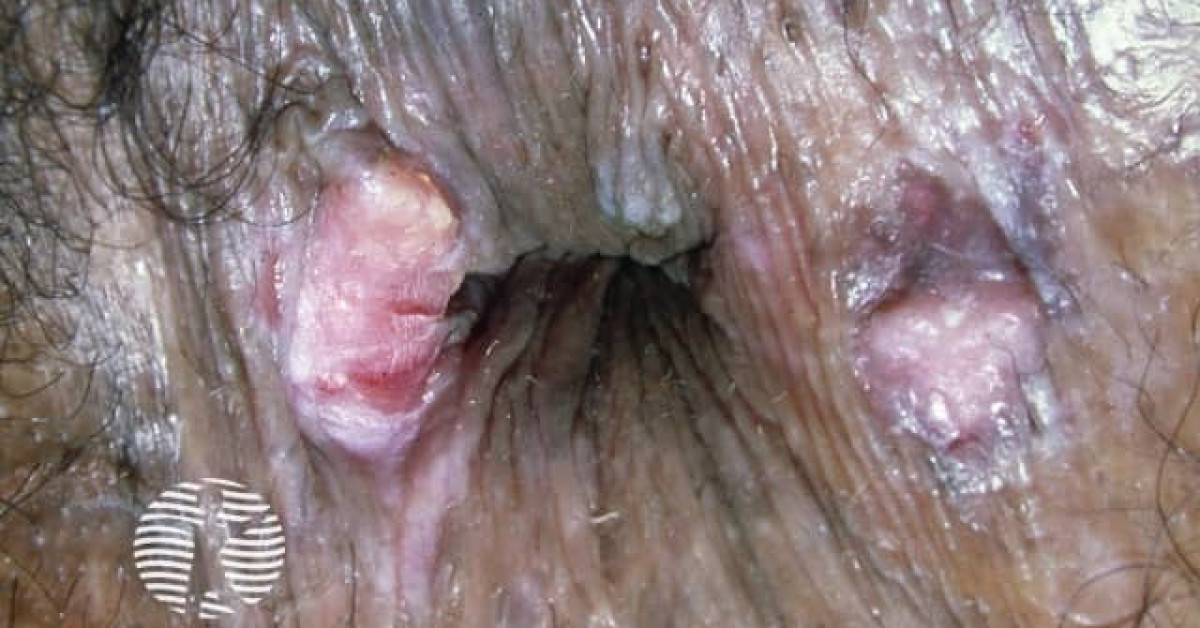
Epidemiology and risk
- ~ 1500 UK diagnoses per year; incidence rising over the past 30 years.
- Strong HPV association — HPV-16 in ~ 80% of cases; HPV-18 also implicated.
- Major risk factors — HIV positivity (RR 30–80×), MSM, immunosuppression, multiple sexual partners, smoking, prior anogenital HPV disease.
- Solid-organ transplant recipients have substantially elevated risk.
- HPV vaccination (now part of UK adolescent programme since 2019 for both sexes) reduces incidence; effect will become apparent over the next 1–2 decades.
Clinical features
- Bleeding, perianal pain, pruritus, palpable mass, ulcer, change in bowel habit, faecal incontinence, lymphadenopathy.
- Often presents late due to symptom attribution to haemorrhoids; high threshold for biopsy of any anal lesion in HIV+ or MSM patients.
- Inguinal node examination at presentation — bilateral inguinal nodes drain lower anal canal; mesorectal nodes drain proximal canal.
- Co-existing AIN, cervical / vulval HPV disease, perianal SCC.
Staging (AJCC 8)
- T1 < 2 cm; T2 2–5 cm; T3 > 5 cm; T4 invades adjacent organs (vagina, urethra, bladder); sphincter / perirectal fat / skin invasion not T4.
- N1 regional nodal metastases: N1a inguinal / mesorectal / internal iliac; N1b external iliac; N1c combined.
- M — M0 / M1.
- Workup — anoscopy, EUA with biopsy, MRI pelvis, CT NCAP, FDG-PET for higher stage, HIV serology, baseline counts; gynae assessment in women.
Management
- Stage I–III — concurrent chemoradiation (CRT) is the cornerstone:
- 5-FU + mitomycin C + RT (Nigro 1974 / ACT II / RTOG 98-11).
- Capecitabine substitutes for infusional 5-FU in many UK centres.
- 50–58 Gy IMRT over 5.5–6 weeks in standard practice.
- Complete clinical response rate 80–90%.
- Residual / recurrent disease — salvage abdominoperineal resection (APR) with permanent colostomy; specialist colorectal oncology MDT.
- Stage IV / metastatic — palliative chemotherapy (cisplatin / 5-FU, carboplatin / paclitaxel); emerging anti-PD-1 (nivolumab, pembrolizumab) data for HPV-driven disease.
- HIV-positive patients — optimise antiretroviral therapy before / during CRT; standard CRT can be delivered with appropriate supportive care.
- Late toxicity — radiation proctitis, sphincter dysfunction, sexual dysfunction, bone toxicity, infertility — psychological and rehabilitation support throughout.
Surveillance and prevention
- 3-monthly clinical examination and DRE for 2 years; 6-monthly to 5 years.
- Imaging (MRI pelvis ± CT) per local protocol — assess complete response at 6 months, then surveillance.
- AIN surveillance — HRA / topical imiquimod / 5-FU per local pathway. ANCHOR trial (NEJM 2022) showed treatment of HSIL reduces anal cancer in HIV+ persons.
- Concurrent cervical / vulval / penile HPV screening as appropriate.
- HPV vaccination — extended uptake in MSM and HIV+ populations.
References
- James RD et al. Mitomycin or cisplatin chemoradiation with or without maintenance chemotherapy for treatment of squamous-cell carcinoma of the anus (ACT II). Lancet Oncol; 2013.
- Palefsky JM et al. Treatment of anal high-grade squamous intraepithelial lesions to prevent anal cancer (ANCHOR trial). N Engl J Med; 2022.
- National Comprehensive Cancer Network. NCCN Clinical Practice Guidelines in Oncology: Anal Carcinoma. Accessed 18 May 2026.
- NHS England / Cancer Alliances. Anal cancer pathway guidance and service specifications. Accessed 18 May 2026; apply local Cancer Alliance pathway wording.
Spot a correction?
If any clinical statement, citation or link on this page needs updating, please email admin@skinoncology.net with the page name, the proposed correction and the supporting source.